
Modern Auction Infrastructure, Built Around Your Business
Most auction houses don’t have a back-office problem. They have a legacy back-office problem — an aging operational core wrapped in a stack of disconnected tools. Bidpath’s Back Office is the modern alternative: purpose-built for auctioneers, actively developed, and engineered for the next decade of auction operations — without forcing you to give up brand control, catalog presentation, or bidder trust.
A short conversation — no migration, no commitment.
Key takeaways
-
- The real cost is hidden. Disconnected legacy tools leak time and money at every handoff — consignments, invoicing, bidder records, and settlements that don’t talk to one another.
-
- It’s a bidder-ownership question. Every sale run through a marketplace-anchored stack builds someone else’s brand with your bidders, not yours.
-
- The proof is real. Flints Auctions brought 65% of buyer transactions back to their own platform after moving off their old system.
-
- Migration is the part houses fear most — and rate highest after. Hands-on onboarding and auction-day support are built in.
-
- Built for the next decade. A purpose-built, actively developed platform with marketplace integrations and a trusted partner behind it.
What is your legacy back office really costing you?
Auction houses rarely change core systems because they want to. They do it when the day-to-day pressure gets too hard to ignore — too many disconnected steps, too much duplicated work, and too many compromises between how the business wants to present itself and how the software actually lets it operate. Bidding is the most visible part of an auction, but much of what builds trust — and whether bidders come back — happens behind the scenes: when consignments are entered, catalogs are prepared, bidders register, invoices go out, and vendors are paid. When those systems sit apart, the strain grows quietly — repeated admin, manual workarounds, reporting gaps, and bidder journeys that feel less joined-up than they should. So the real decision is less about adding another platform and more about strengthening how the whole operation runs. Bidpath is built for exactly that — back office, bidding, websites, inventory, reporting, and integrations in one connected environment, designed around how auction businesses actually work. We explored this in more depth in Behind Every Great Auction Is a System Nobody Notices.“Every workaround you build around old software is a tax on the next decade of your business.”
Whose customer is your bidder, really?
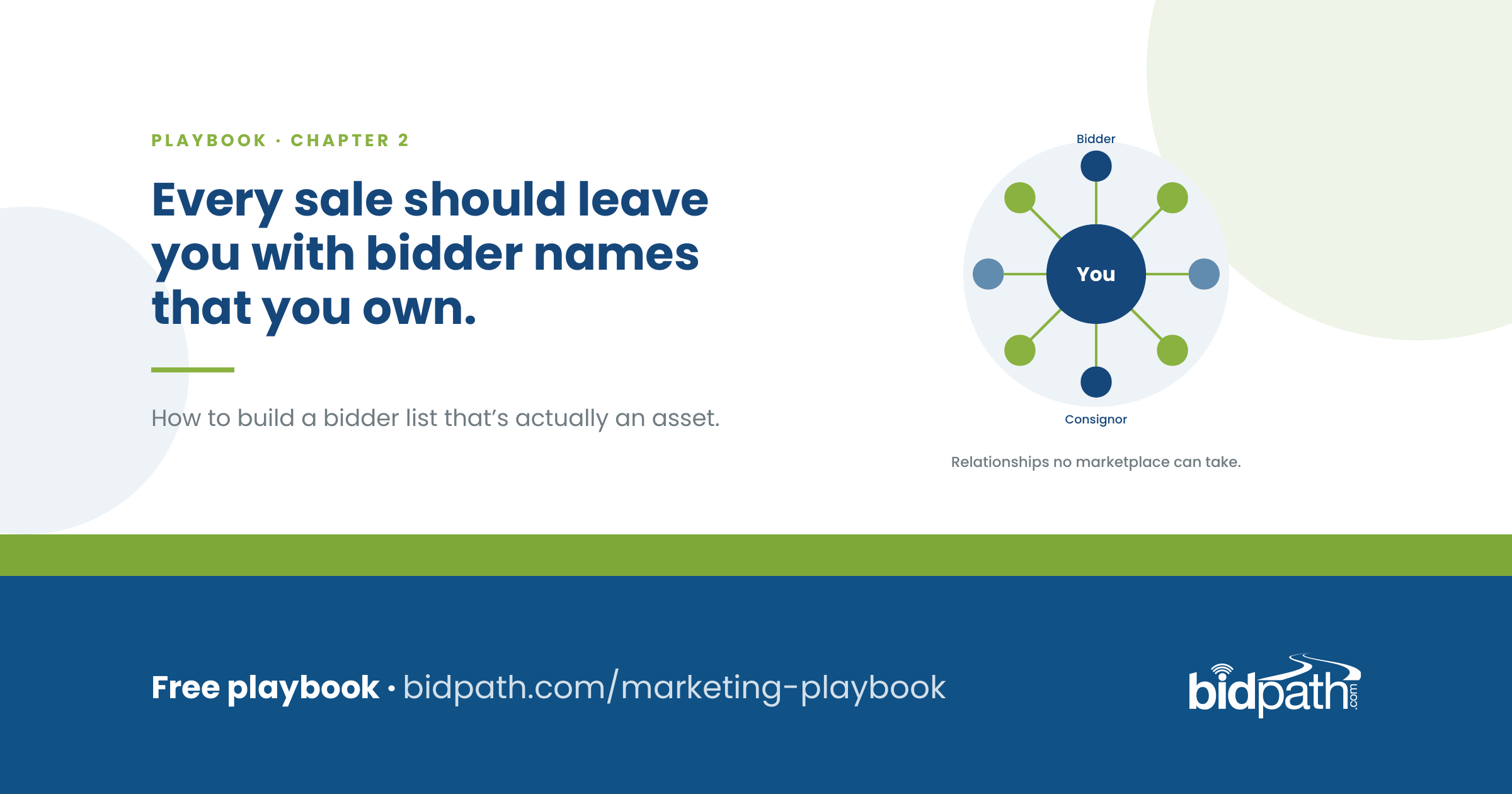
When a bidder only ever finds your sale on someone else’s marketplace, whose brand wraps the catalog? Whose interface drives the bidding experience? Whose receipt confirms the win? And whose name does the bidder remember the next time they’re looking for the kind of piece you specialize in? For many auction houses, software decisions aren’t really software decisions at all — they’re decisions about bidder ownership, brand control, and the future value of the business.Your brand wraps the catalog. Your experience drives the bidding. The bidder remembers you — and the relationship is yours to keep.
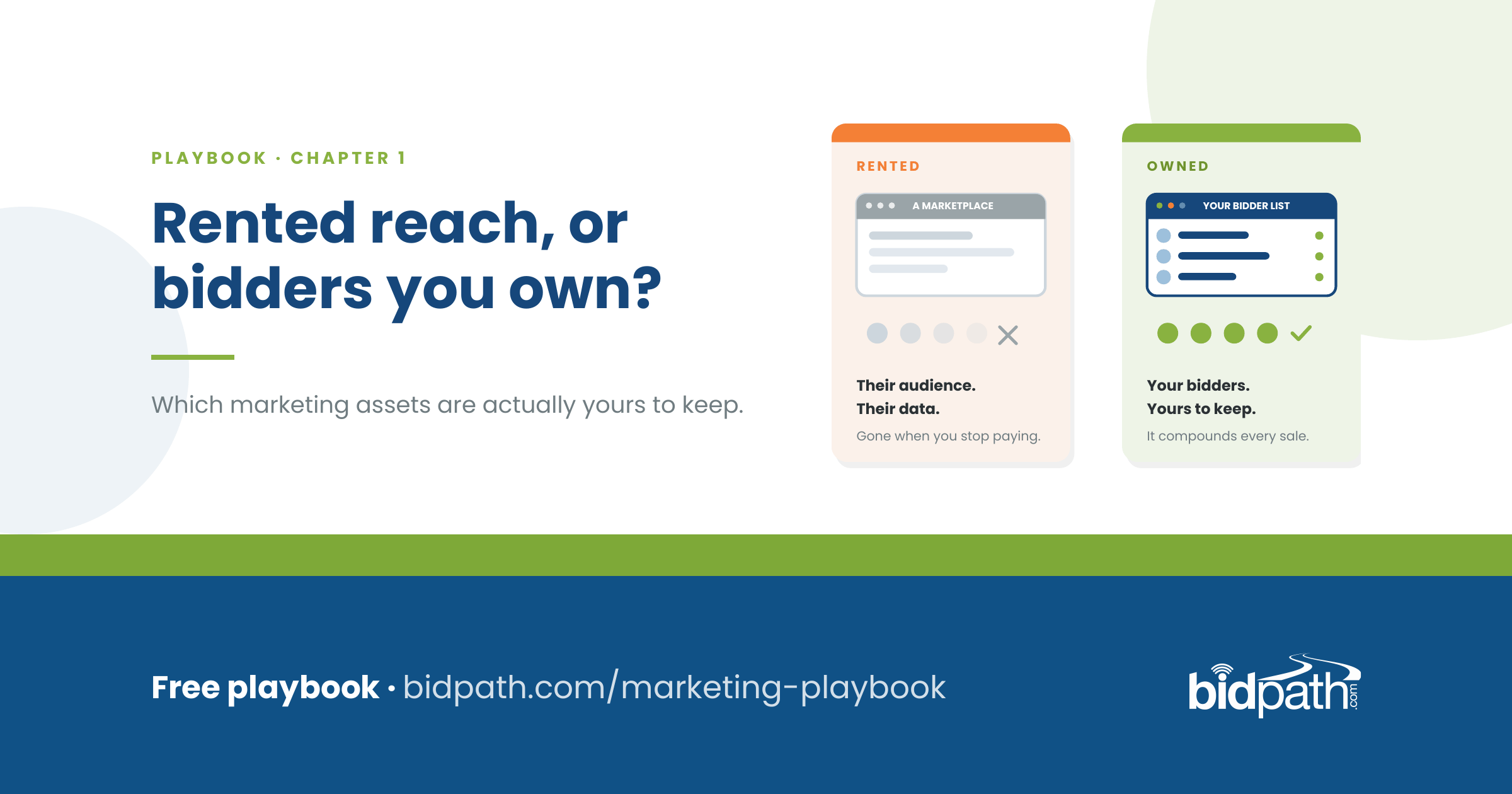
If a marketplace is your only route to bidders, their brand wraps your sale and their interface owns the moment of the win. The bidder remembers them — and the relationship sits with them, not you.
What does moving to a more modern system look like?
When Flints Auctions moved off their previous solution, they weren’t looking for a small upgrade. They wanted one auction-built platform to run the whole operation — and to bring the bidder relationship back to their own brand. A few months after the move:of buyer transactions now happen on their own platform — not a third-party marketplace
of buyers arrive via their own website — major SEO impact and international consignor growth
of lots in a recent sale came from overseas consignors, supported by improved site performance
+ Real-time lot tracking — better-organized warehouse prep across the whole sale.
“Our relationship with the Bidpath team is absolutely brilliant. They listen, they deliver quickly and professionally, and they’re always there when you need them.”
Joshua Cole, Auctioneer & Media Officer, Flints Auctions
What about the migration — and auction day?
The most common hesitations about switching come down to two things: the move itself, and what happens on auction day if something goes wrong. Both are the parts Wimbledon Auctions said they worried about most before switching — and the parts that ended up giving them the most confidence in choosing Bidpath.“I worried about adding extra stress and tasks to my already large workload. Once I joined Bidpath, the reality was the total opposite to my expectations. The onboarding experience was straightforward and stress-free. They had everything sorted within a few months, and after a few training sessions I was good to go.”
“On auction day — often the most stressful day of the month — any technical glitches or errors, Bidpath are always there to help resolve things. I feel confident knowing that we have the best support available.”
Wimbledon Auctions
What are you actually choosing with Bidpath?
Auction technology investment cycles are long. The system you choose now will shape your operation through the next several seasons — not just the next sale. With Bidpath, you’re choosing:-
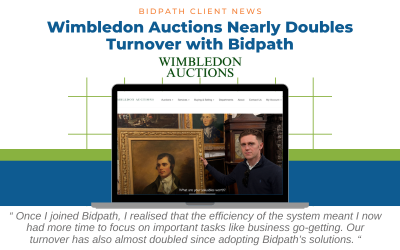
- Wimbledon Auctions nearly doubled their turnover after partnering with Bidpath.
-
- Flints Auctions brought 65% of buyer transactions back to their own platform.
-
- Zachys Wine Auctions called out Bidpath’s API suite and innovative solutions as the deciding factor.
“Bidpath stood out amongst its competitors due to its robust functionality and API suite, exemplary industry reputation, and innovative solutions.”
Patricia Bowman, Zachys Wine Auctions
Bidpath is infrastructure, not just software.
Questions auctioneers are asking
What is an auction back office?
The back office is the operational backbone of an auction business — cataloging, consignments, settlements, bidder management, accounting workflows, and post-sale operations. When those functions sit in disconnected tools, strain builds quietly: repeated admin, manual workarounds, and reporting gaps. A purpose-built back office connects them so data is entered once and flows everywhere.How is Bidpath different from a marketplace platform?
Bidpath is built around auction houses, not adapted from a general-purpose marketplace. Your brand wraps the catalog, your interface drives the bidding, and the bidder relationship stays with you — rather than being anchored to a third-party marketplace that places its own name first.Is migrating off our legacy system disruptive?
Migration is the part most houses worry about most — and the part they rate highest afterward. Onboarding is hands-on and led by a team with real auction industry experience. Wimbledon Auctions described the process as straightforward and stress-free, with everything sorted within a few months and a few training sessions.Can Bidpath still connect to third-party marketplaces?
Yes. Bidpath supports third-party marketplace integrations, so you stay flexible and connected on whatever platform you choose while keeping your own platform as the operational core and primary bidder destination.Why start now rather than closer to consignment season?
Auction technology investment cycles are long, and the back-office work that supports a stronger Q3/Q4 starts now. Stronger catalogs, smoother settlements, faster invoicing, and a better bidder experience all get harder to retrofit once consignment season is in full swing.Built for auctioneers planning for the future — not the last decade.
If Back Office is on your evaluation list this quarter, let’s compare notes. We have discovery conversations open this week and next — no migration, no commitment.
Read More






🚀 Ready to Elevate Your Auction Tech?
Bidpath is helping auctioneers worldwide modernize operations with customizable, reliable software. Contact our team to discuss your needs, or explore our auction solutions. For more insights and news, visit our blog or follow us on LinkedIn.